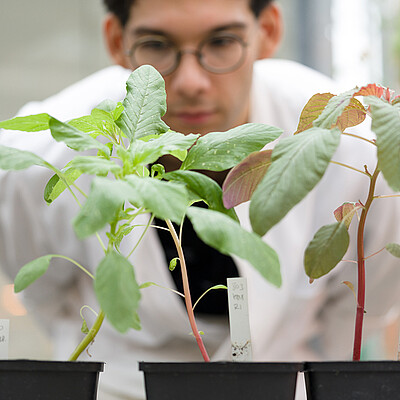
WELCOME TO ORGANIC AGRICULTURE IN EUROPE!

European Double Degree Master 
Organic Agriculture and Food Systems

EUR-Organic is a two-year international Double Degree Master’s programme offered by a consortium of six leading European universities in organic agriculture, resilient farming, agroecology and sustainable food systems.

The programme equips students with advanced scientific knowledge, practical skills and an international perspective to address current and future challenges of organic food systems.

Key Features

  • Study and live at two universities in two European countries
  • Fully taught in English
  • Start with a joint Start Up module for all Double Degree Students
  • Strong research and practice orientation
  • Gain a Double Master degree from two universities

Duration: 2 years (120 ECTS) 
Degree awarded: Double Master's Degree
Language: English

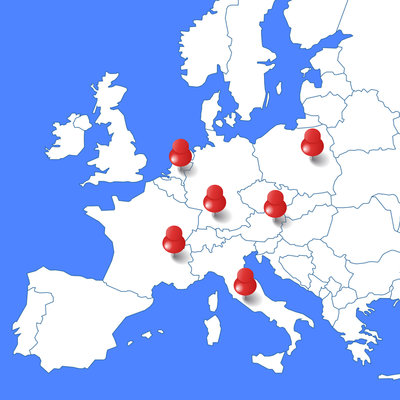
Organic Agriculture at Six Universities

EUR-Organic covers the entire organic food chain, from primary production to processing, marketing, governance and sustainability assessment. Organic Farming is based on a holistic approach and thus the processing and marketing of organically grown food requires special skills and knowledge.

None of the partner universities alone can offer such a wide range of elective and compulsory modules on organic agriculture and food systems. Together the partners create an added value for the students in teaching and research, e.g. in the wide range of topics for the master theses. Students are challenged by different thematic and didactic approaches throughout the course of their studies: Each partner university contributes a distinct academic specialisation, allowing students to tailor their learning path.

During the MSc programme all Double Degree students will be studying at two different universities. The university where the student is accepted in the first year of the EUR-Organic is referred to as the home university. The university that the student chooses as second university will be referred to as the host university. As SGGW and ISARA do not offer a full EUR-Organic MSc programme yet, students can currently choose between UNITUS, UHOH, BOKU and WU as home university. Students starting at WU can only choose between UHOH and BOKU as host university. Students starting at UNITUS can only choose between ISARA, UHOH, BOKU and SGGW as host university. Students starting at BOKU and UHOH can choose between all partners as 
host university.

WUR – Wageningen University (Netherlands)

Explore

Resilient Farming and Food Systems 
Systems thinking, resilience, sustainability 
transitions and policy analysis

SGGW – Warsaw University of Life Sciences (Poland)

Explore

Organic Food Quality and Marketing 
Organic food quality, certification, value 
chains and consumer studies

BOKU – Universität für Bodenkultur Wien (Austria)

Explore

Organic Agricultural Systems and Agroecology 
Sustainability assessment, environmental 
impacts and rural development

UNITUS – University of Tuscia (Viterbo, Italy)

Explore

Organic Agriculture in the Mediterranean Area 
Mediterranean organic farming systems, soil 
management and biodiversity

ISARA Lyon – Institut supérieur d’agriculture (France)

Explore

Agroecology 
Agroecological system design, innovation and 
food system transformation

UHOH – University of Hohenheim (Germany)

Explore

Organic Agriculture and Food Systems 
Organic production, food chains, economics 
and governance

Study Structure

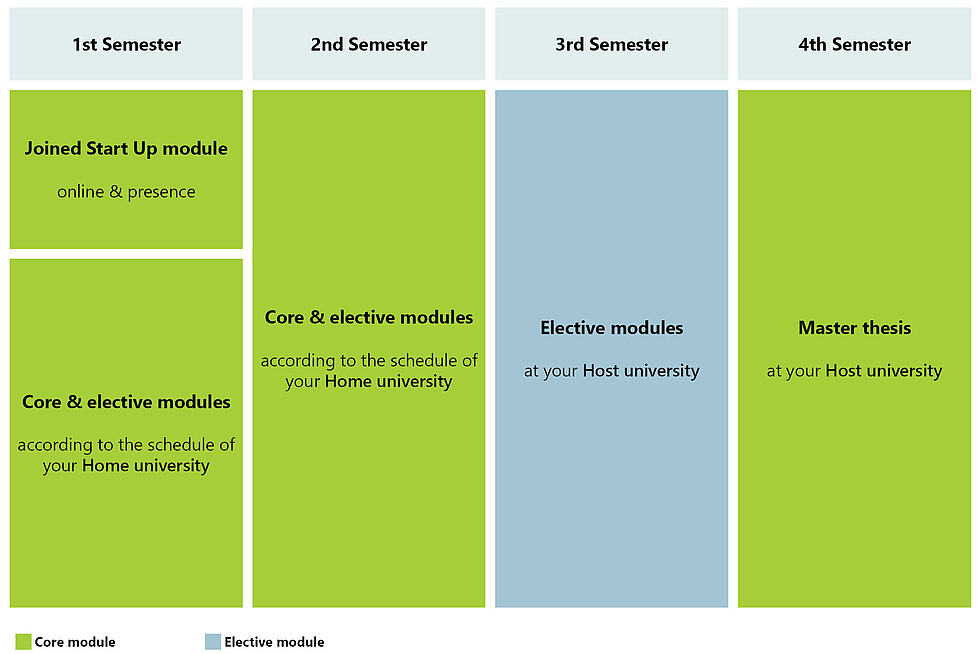
The full MSc study programme is worth a total of 120 ECTS. The programme is structured in four semester packages, each with a workload of 30 ECTS:

  • two Basic Semester Packages (2 x 30 ECTS credits) at your home university
  • one Specialisation Semester Package (30 ECTS credits) at your host university
  • Master Thesis (30 ECTS credits) at your host university

Further Information:

  • The programme starts ones pear year always in winter semester.
  • A joint start-up module (taking place at the beginning of the first semester) is compulsory for all double degree students enrolled in the programme.
  • Within your first semester you will choose your Host university and one of the specialisations offered at this university.
  • In the second semester you will continue with the second basic semester at your home university.
  • In the third semester you will go to your host university and start the specialisation.
  • Finally, you will complete the Master programme with a Master Thesis conducted at your host university.

Application

Application Programme

Application Application periods (NON- EU / EU applicants) differ for the different universities. The individual deadlines are published on the websites of the partner universities. Application documents are sent to the institution that the student chooses as home university. Each university is responsible for the admission of the students in full respect of common admission criteria and according to their individual admission procedures. In November each year, the EUR-Organic Management Board meets for a consortium admission. The EUR-Organic students who have been admitted individually at the home universities will be discussed and selected by the Board for consortium admission. The selection will follow the admission criteria of the host university in line with the reciprocity of student numbers and according to the preferred choice on host universities. Students will have to point out at least two preferred host universities in advance.

General Admission Requirements

  • Acknowleged Bachelor’s degree in agriculture, natural-, environmental-, food- or related sciences
  • At least two of the following disciplines have to be followed before: Physics/chemistry, Biology/Ecology, Mathematics/Statistics
  • Educational background and relevant professional experience to Organic Agriculture
  • English language proficiency (Toefl, IELTS, etc.)
  • Motivation for the studies

Application Process

  • Choose a home university
  • Apply via the university’s official application system for the Double Degree
  • Submit required documents and apply until the application deadline indicated by the chosen home University

Please check out closely the application information on the webpage of the University you like to start your studies with (home University). The admission criteria of home universities may slightly vary. Please notice application at only one home university is requested.

Start by reading everything thoroughly. This will help ensure that you have the qualifications to apply as well as information about the costs of the programme before you continue with your application.

Apply for your Home University

UHOH – University of Hohenheim

WUR – Wageningen University

UNITUS – University of Tuscia

BOKU University

The home University selects and admits in full respect of common admission criteria and according to their individual admission procedures. Above the general entry requirements selection will be based upon grades, education background and relevant professional experiences. You will be individually informed about the outcome of your application from the University you applied with.

Having been selected for admission at the home University of your choice a consortium admission among the six partners will ensure that a place at your host university will be reserved for you. You may select three priority host universities (out of five). The decision as to which of your preferred universities will accept you is made each year in November, i.e. after you have already started your studies and after you have had a chance to learn about the opportunities at the host universities.


Fees

Students pay fees (e.g. application fee, admission fee and tuition fee) according to the rules of their home university during both study years. Students are exempted from paying tuition fee at their host university except for the studies at ISARA. If students chose ISARA as their host university, they have to pay a study fee for their enrolment at ISARA. WU students continuing to ISARA are only paying ISARA fees and not also WU tuition fee. Students choosing ISARA as a host university are not eligible to request Erasmus grants.

If a study delay is caused by the student, it is up to the host university to ask for tuition fees after the regular study period.

Further information on tuition fees of the relevant home and host university can be found on their respective websites.

Career Perspectives

Graduates are qualified for careers in international contexts, including:

  • Organic farming advisory services
  • Research institutions and PhD programmes
  • Organic food industry and quality management
  • Certification bodies and NGOs
  • Policy and public administration
  • Sustainability and food system consulting
  • Agroecology

Contact

Each of the Universities has an academic and institutional program coordinator, responsible for the program.

Please contact the institutional program coordinator of your chosen home university for question. Please also check beforehand the information on the program on the relevant webpage of the home university.

Institutional program coordinators:

University of Hohenheim 
Kerstin Hoffbauer 
email: eurorganic(at)uni-hohenheim.de

Boku University 
Dr. Nikolaus Hruschka 
email: eur-organic(at)boku.ac.at

Wageningen University 
Dr. Anja Kuipers 
email: anja.kuipers(at)wur.nl

University of Tuscia 
Marcella Barone 
email: marcella.barone(at)unitus.it

ISARA Lyon 
Dr. Aurélie Ferrer 
email: aurelie.ferrer(at)isara.fr

Warsaw University of Live Science 
Dr. Dominika Srednicka-Tober 
email: dominika_srednicka-tober(at)sggw.edu.pl